Cargo system for couriers shipping parcels to UzbekistanCo-founder
Pochtachi
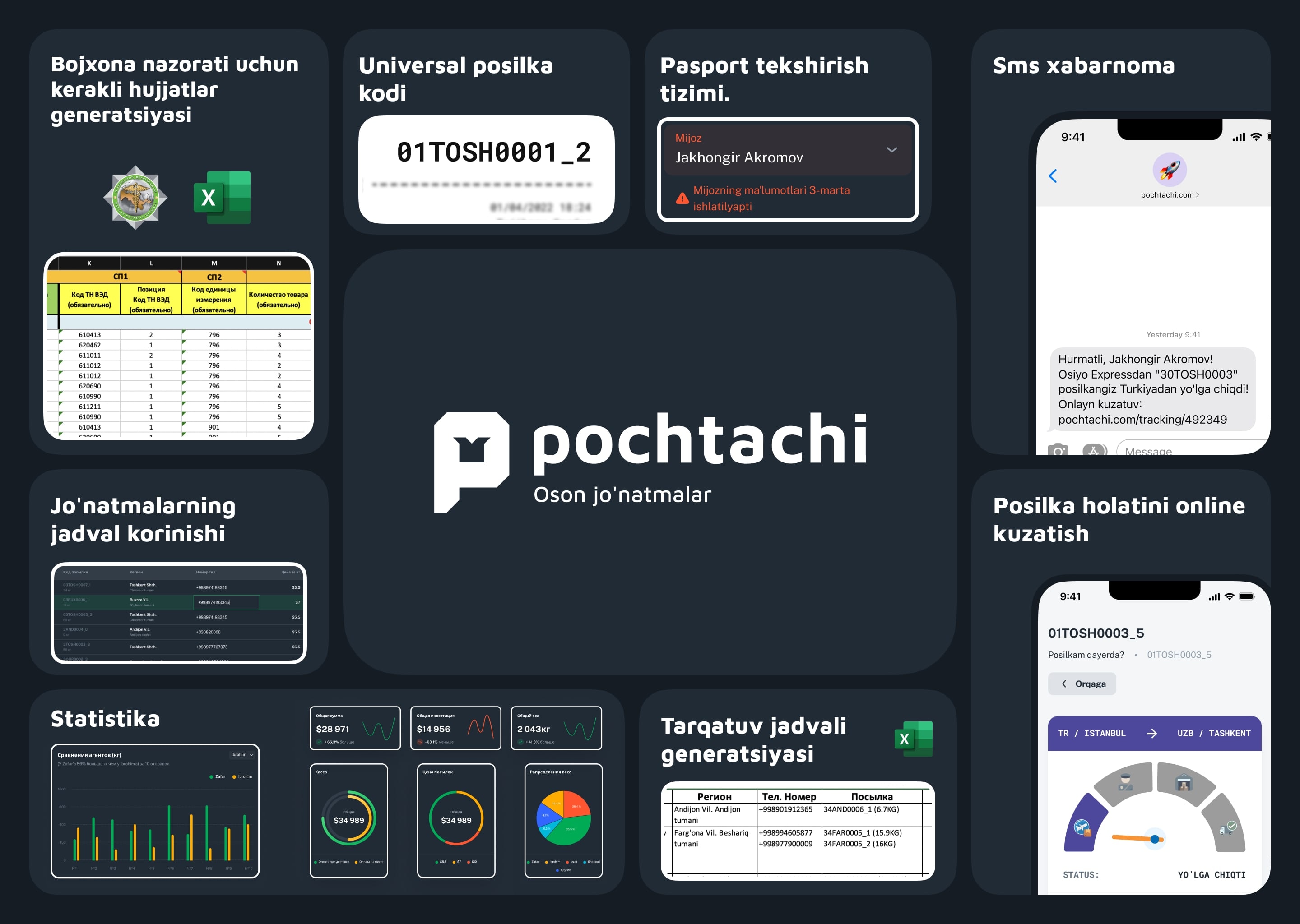
A customs declaration that used to take a week now came together in minutes. A parcel's whole journey from Turkey, Germany and Dubai to Uzbekistan, in one system.
- Client
- Own startup
- Role
- Co-founder; product manager and designer
- Year
- 2022-2025
- Status
- In use 2023-2025
How it started
Back when I was still studying at Istanbul University, I kept the books for Uzbek cargo and parcel companies in Turkey. I already understood software, and every day I saw how much of the work was done by hand, and it wore me out. There was no team back then, so I did what I could: automations in Excel. For companies that filled in invoices by hand, that looked like the work of a genius. I wasn't satisfied: I knew it could be better.
When things at Dokon calmed down a little, the team and I agreed to build Pochtachi. I knew the domain from the inside and understood the processes as if they were my own, so we got to production very quickly. The first client was the very company whose books I used to keep.
Uzbekistan's customs was just switching to electronic declarations: shipments had to be submitted as an Excel file or an import. Pochtachi built that file from the data already in the system. Among the Uzbek cargo companies in Turkey we were the first to do it: filling in a declaration that used to take a week started taking minutes, and the parcel business was never the same. After that, other companies in Turkey started joining us.
From there we grew with them: parcel tracking, SMS for customers, automatic invoices, passport recognition in Python with OCR, because there was no AI for that yet. Clients came from Germany, and parcels started coming from Dubai too. The network grew to 8-10 offices in Turkey.
In 2025 customs moved declarations onto its own portal, with no outside integrations, and our system was no longer needed. For the product, that was the end. For the problem it all started with, it's the best possible outcome: the state solves it now.
What I did
- Parcel intake and weighing with labels
- Packing into bags and boxes for each flight
- Customs declarations with HS (TN VED) codes: the file for customs is built from the system's data
- Assigning every parcel to a flight and tracking it, SMS for customers
- Passport recognition with OCR in Python: there was no AI for this back then
- A monthly limit per passport: the system counts shipments for every passport and blocks it once the limit is exceeded
- Automatic invoices and reports for the courier business
In numbers
- parcels for one client
- 11,000+
- flights
- 88
- regions of Uzbekistan
- 14/14
Next storyInstallment payments platform
Nasiyah